

BAS-Arctic Working Group
Working Group purpose
The Arctic Working Group is a group of more than 60 BAS scientists and operations staff who are currently working in the Arctic or have aspirations to work there. The AWG was started in 2018 to bring together researchers in different fields to share their experiences of Arctic research, to enable new collaborations, and to maximise the potential output of this group by coordinating efforts and knowledge regarding Arctic projects, funding calls and logistics.
Terms of Reference
Content coming soon
Our priorities
Content coming soon
Map of Arctic Working Group projects
Arctic marine geophysics
This research focuses on investigating the glacial histories of Arctic ice sheets and ice caps using the marine geological record preserved on continental margins. By reconstructing past ice sheets, their …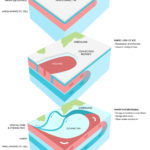
SDOO
Abrupt warming episodes punctuate Greenland ice core records throughout the last glacial period. These events were first identified in two Greenland stable water isotope records (Dansgaard et al., 1993), and …
Climate and Ice during the Last Interglacial
During the Last Interglacial (129-116 thousand years ago, ka) CO2 and global temperature were both higher than they were before human industrialisation. By examining Last Interglacial climate, we thus gain …
TEA-COSI
TEA_COSI assesses Arctic Sea-ice which has an important impact on currents and ocean circulations around the globe
UKESM-BAS
Reliable projections of the Earth’s climate are at the heart of scientific support for international efforts to address global change. There is increasing recognition that reliable projections require that physical …
ESA IAP ArcticSat project
Situational awareness in the Arctic
ICE-ARC
physicists, chemists, biologists, economists, and sociologists from 21 institutes in 11 countries across Europe assess the rapid retreat and collapse of Arctic sea-ice cover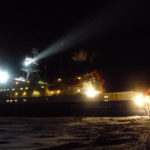
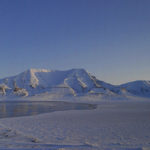
SIOS
Svalbard Integrated Earth Observing System (SIOS) is an international infrastructure project. There are 26 partners from Europe and Asia involved. The essential objective is to establish better coordinated services for …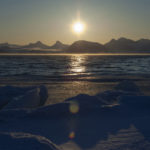
SEANA
Global shipping is undergoing significant changes. In January 2020 the maximum sulphur emission by ships in international waters will reduce from 3.5% to 0.5% by mass, as a result of …
Data As Art
DATA AS ART is an ongoing science & art project in development at NERC’s British Antarctic Survey (BAS). It visualises science data (in its widest definition), to create stunning and …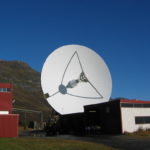
EISCAT Science Support
The UK EISCAT support group (UKESG) is a collaboration between the British Antarctic Survey and the Rutherford Appleton Laboratory, funded via the National Centre for Atmospheric Science (NCAS) EISCAT, the …
Iceland Greenland seas Project
PI: Ian Renfrew (University of East Anglia) CO-I’s: Tom Bracegirdle, Tom Lachlan-Cope, Alexandra Weiss PDRA’s: Andrew Elvidge (University of East Anglia), James Pope NERC Grant: NE/N009924/1 Project Partners: Robert Pickart …
ACSIS
Major changes are occurring across the North Atlantic climate system: in the ocean and atmosphere temperatures and circulation, in sea ice thickness and extent, and in key atmospheric constituents such …
Increasing ship traffic in Inuit Nunangat
17 August, 2023
Researchers from British Antarctic Survey are heading to the Canadian Arctic this week to learn more about the impacts of increasing ship traffic in Inuit Nunangat. In recent years, climate …
Poet Laureate visits UK Arctic Research Station
14 July, 2023
The UK Poet Laureate Simon Armitage CBE has travelled to the UK Arctic Research Station, where he will create new works inspired by the visit. While hosted at the UK …

Britain’s Arctic Research Station celebrates 30 years of science and monitoring climate change
28 September, 2021
The Arctic Station in Ny-Ålesund, Svalbard in Norway, the UK’s permanent Arctic research facility, celebrates its 30 years anniversary this week (Tuesday 28 September) as it continues to undertake critical …
BAS celebrates International Day of Women and Girls in Science
11 February, 2022 by Melody Clark
Today, 11 February, is International Day of Women and Girls in Science, a global initiative led by UNESCO and UN-Women. To celebrate, we have asked some of our female staff …
Seasonal variation in zooplankton assemblages in Ryder Bay, Adelaide Island, Antarctic Peninsula
6 February, 2026 by Alice Clement, Lloyd Peck, Simon Morley
Seasonal and inter-annual variations in zooplankton play a vital role in marine ecosystems. In Antarctica, because of the extreme seasonality and ice extent, zooplankton studies are predominantly conducted in summer…Ocean heat forced West Antarctic Ice Sheet retreat after the Last Glacial Maximum
6 February, 2026 by Elaine Mawbey, Claus-Dieter Hillenbrand, James Smith, Kate Hendry, Pierre Dutrieux, Robert Larter, Svetlana Radionovskaya
The West Antarctic Ice Sheet (WAIS) is thinning at an accelerating rate, driven by melting at its margins by warm Circumpolar Deep Water (CDW). However, this understanding is largely based…Read more on Ocean heat forced West Antarctic Ice Sheet retreat after the Last Glacial Maximum
Uncovering genetic population structure in the Endangered northern rockhopper penguin (Eudyptes moseleyi) across islands in the Southern Atlantic and Indian oceans
3 February, 2026 by Jaimie Cleeland, Norman Ratcliffe, Richard Phillips
Background: The northern rockhopper penguin (Eudyptes moseleyi) is a threatened species, listed as Endangered globally by the IUCN owing to rapid population decreases in the past, combined with a limited…The Southern Annular Mode and its relationship with Antarctic temperature in contrasting future storylines
3 February, 2026 by Andrew Orr, Gareth Marshall, Ryan Williams
The Southern Annular Mode (SAM) strongly modulates Antarctic near-surface air temperature (SAT) variability. We employ a storyline approach to examine projected end of century changes in the spatial SAM-SAT relationship…Features of interest from a multi-season satellite survey of baleen whales on the West Antarctic Peninsula
2 February, 2026 by Connor Bamford, Hannah Cubaynes, Jennifer Jackson, Penny Clarke
The application of very high-resolution satellite imagery for the purpose of studying wildlife, particularly in remote regions, has gained significant traction in recent years. With this, there has been an…Metacommunity structural changes of Antarctic benthic invertebrates over the late Maastrichtian
1 February, 2026 by Huw Griffiths, Rowan Whittle, Tasnuva Khan
Seymour (Marambio) Island, Antarctica has one of the most expanded onshore Cretaceous–Paleogene sedimentary successions in the world. The deposition of the López de Bertodano Formation (~70–65.6 Ma) covered a time of…Major paleogeographic and paleoclimatic changes during the late Paleozoic, Early Cretaceous and Cenozoic of central Australia and their influence on recycling of sediments
1 February, 2026 by Jane Francis
During the late Paleozoic glacial ice extended from Antarctica across most of the Australian part of Gondwana. Maximum ice thickness over Antarctica was ∼5400–8000 m and over central Australia 2700–4000…Putative drivers of maritime Antarctic soil resistomes in the early 21st century: A baseline for monitoring environmental change and human influence
1 February, 2026 by Kevin Newsham
Antibiotic resistance genes (ARGs) are present in all ecosystems and encode the defences that microorganisms have naturally evolved to defend themselves against antimicrobial agents. The use and synthesis of antibiotics…Challenges for ionosphere-thermosphere science
30 January, 2026 by Andrew Kavanagh, Mai Mai Lam
Modelling the Ionosphere-Thermosphere system is one of the grand challenges for Earth system scientists. On 8 March 2024 the Royal Astronomical Society hosted a Specialist Discussion Meeting, with both online…A new index used to characterise the extent of Antarctic marine coastal winds in climate projections
30 January, 2026 by Thomas Caton Harrison, Thomas Bracegirdle
Antarctic marine coastal near-surface winds play a key role in Southern Ocean circulation. Using the ERA5 reanalysis dataset, this paper develops directional wind constancy as a tool for identifying key…Diversity of DNA viruses in the atmosphere of sub-Antarctic South Georgia
28 January, 2026 by David Pearce, Peter Convey
Studying airborne viruses in remote environments like the sub-Antarctic island of South Georgia offers key insights into viral ecology, diversity, and their role in shaping ecosystems through microbial and nutrient…Read more on Diversity of DNA viruses in the atmosphere of sub-Antarctic South Georgia
Endolithic fungal diversity is present in the unique phosphatized rocks of an environmentally extreme equatorial archipelago, revealed by DNA metabarcoding
28 January, 2026 by Peter Convey
We evaluated endolithic fungal diversity associated with rocks sampled at the polyextreme Brazilian São Pedro and São Paulo archipelago using a DNA amplicon metagenomics approach. We detected 808,547 fungal DNA…Inferring the ice sheet sliding law from seismic observations: A Pine Island Glacier case study
21 January, 2026 by Alex Brisbourne, Andy Smith, Rosie Williams, James Smith, Kevin Hank, Robert Arthern
The response of the Antarctic ice sheet to climate change and its contribution to sea level under different emission scenarios are subject to large uncertainties. A key uncertainty is the…Icebergs, jigsaw puzzles, and genealogy: automated multi-generational iceberg tracking and lineage reconstruction
21 January, 2026 by Andrew Fleming, Ben Evans, Scott Hosking
Tabular icebergs calve from ice shelves and glaciers in Antarctica, Greenland, and northern Ellesmere Island. These “ice islands”, as they are referred to in the Arctic, drift, melt, and fragment,…Thermal responses and climate change implications of spring and autumn spawning Patagonian squid (Doryteuthis gahi) embryos
17 January, 2026 by Simon Morley
Ocean warming affects ectotherm physiological and phenological processes, potentially creating mismatches between early life stages and their prey. Seasonal spawning cohorts are thought to provide flexibility in responding to environmental…New Folsomotoma species (Collembola) found on Byers Peninsula, Livingston Island, South Shetland Islands
14 January, 2026 by Peter Convey
Here we describe a new springtail species found on Byers Peninsula, Livingston Island. The new species, Folsomotoma punctata, is known from sub-Antarctic South Georgia, but this is a first occurrence…The development of a Global Ocean Wildlife Analysis Network of Baited Remote Underwater Video Systems – Drivers, successes, challenges and future aspirations
13 January, 2026 by Simon Morley
The Global Biodiversity Framework underpins global policies driving marine protection and conservation. Meeting the targets of these policies requires an understanding of how marine ecosystems respond to anthropogenic pressures such…Diatom lipids open window to past ocean temperatures in the polar regions
9 January, 2026 by Claire Allen
Sea surface temperature is a key indicator of climate change on Earth and is central to all related modelling endeavours. However, sea surface temperature is notoriously difficult to reconstruct accurately…Read more on Diatom lipids open window to past ocean temperatures in the polar regions
Modelled dynamics of floating and grounded icebergs, with application to the Amundsen Sea
8 January, 2026 by Andrew Fleming, Andrew Meijers, James Smith, Kelly Hogan, Paul Holland, Yavor Kostov
Icebergs that ground on the submarine Bear Ridge in the Amundsen Sea are known to block the drift of sea ice, playing a crucial role in maintaining shelf sea ocean…